

A workplace people can perform in
Too warm, too dry or too stuffy — the indoor climate affects both wellbeing and productivity. CLIMAID keeps it in place, office by office.
Complaints about the temperature, with no figures to discuss
Complaints about temperature and air are among the most common in office buildings, but without readings it becomes a discussion about impressions.
No more guesswork
21.4 °C measured at the desk settles the argument about who is cold.
Ventilation by use
The system runs when the meeting room is in use — not from seven to five every day.
An argument at renegotiation
Documented indoor climate counts when the lease is renewed.
From measurement to action
- Wireless sensors are fitted without altering the building
- Data is collected and analysed continuously in CLIMAID INSIGHT
- You get alerts and recommendations before problems grow
- The effect is documented in reports you can use


Indoor climate and wellbeing
Complaints about temperature and air are among the most common in office buildings. Without measurements, the discussion is about how people feel. CLIMAID measures temperature, humidity and air quality in offices and meeting rooms, so the conversation can start from figures. 21.4 °C measured at the desk says more than a sense that it is cold.
Rysta, now part of CLIMAID, has worked with indoor climate and building operations in Germany since 2018, particularly in offices and public buildings.

Ventilation by actual use
Many systems run on a fixed schedule, from seven to five every day. With the HVAC integration add-on, CLIMAID connects to heating, cooling and ventilation systems and controls them by use. The ventilation runs when the meeting room is in use.

Energy and operations
CLIMAID SMART learns the building's thermal characteristics and patterns of use and combines indoor climate data with weather forecasts. The heat supply is adjusted continuously, keeping the temperature stable with as little energy as possible. That typically saves 10–20 % on the heating bill.

Documented indoor climate
A documented indoor climate counts when a lease is renewed or renegotiated. The reports in CLIMAID INSIGHT show consumption and indoor climate for the building and the individual rooms. With the ESG documentation add-on, they can be used directly in sustainability reporting. Automatic reports document status and progress for management and audit.
Aida in CLIMAID INSIGHT
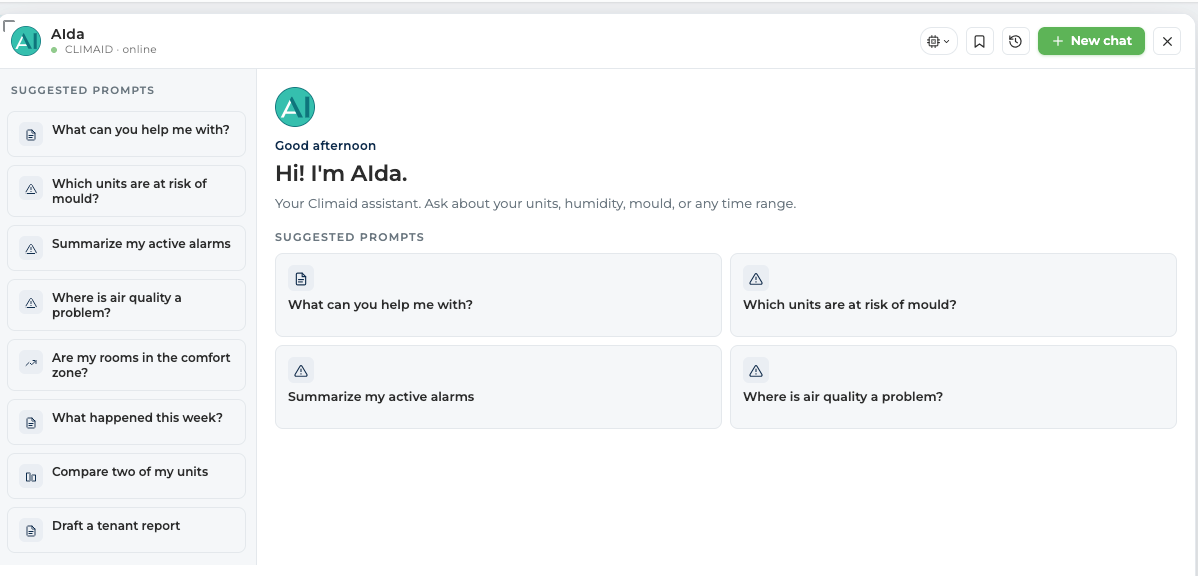
Aida is an AI assistant built into CLIMAID INSIGHT that knows your buildings. Facilities staff type the question in plain language and get the answer together with the readings it is based on. Meanwhile, more than 150 AI agents watch the data around the clock and send an alert when a pattern needs a person.
Questions and answers
Shall we look at your buildings?
Book a no-obligation meeting — we will calculate your concrete potential.