
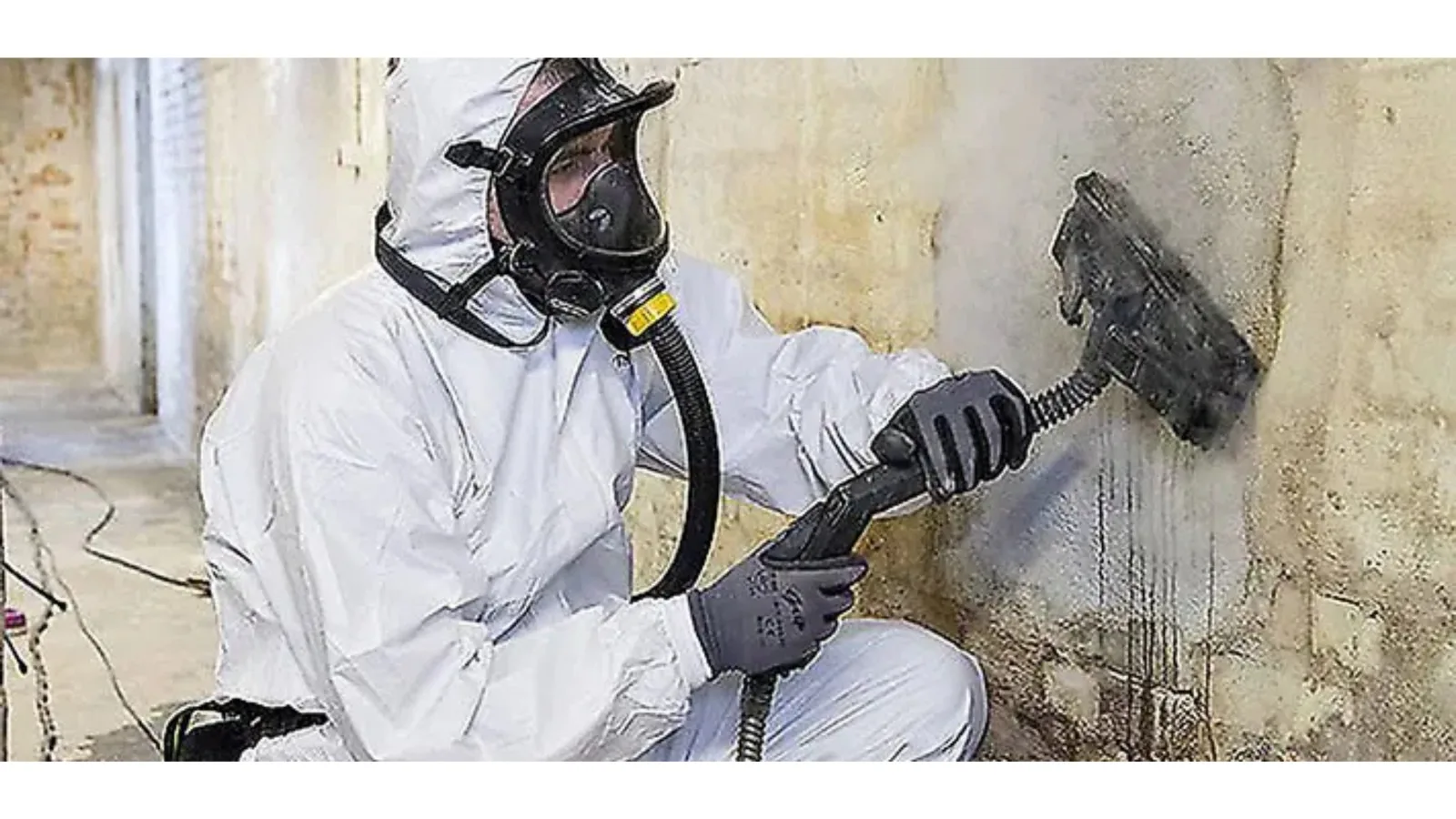
Mould — the frugal survivors
Mould needs neither light, special nutrients nor visible moisture to thrive. It lives quietly until it becomes a problem.
Introduction
Mould exists everywhere in nature and in all buildings, new and old. It only becomes a problem when moisture content exceeds what structures can tolerate, and that state persists.
Mould is almost never the real problem. It is a symptom of moisture load.
Frugal organisms
Mould is remarkably frugal. It can grow on most building materials, living off the materials themselves or dirt on them. It needs no light to grow and can live on visible surfaces as well as inside cavities in structures and ventilation systems, as long as it is damp enough.
Mould thrives best at temperatures between 20 °C and 30 °C. At lower temperatures it grows slowly, and growth normally stops below about 5 °C. So the winter months do not necessarily stop growth indoors, where we keep comfortable temperatures.
Growth requires relative humidity above about 70% at the surface, but the risk rises markedly at 75-80%. It is the interplay between temperature and humidity that decides the risk, not the two factors separately.
Growth before visibility
Mould growth can begin after just a few weeks of constantly high humidity, but it can take months before the growth becomes visible to the naked eye. By the time you see dark patches on the wall or notice the characteristic musty smell, the process has been under way for a long time.
The damage is done long before you can see it. Reactive damp control, waiting for visible signs, is therefore a losing strategy.
Dead mould can still trouble residents. Mixed with dust and stirred into the air, it can reach mucous membranes and airways and cause symptoms such as tiredness, headaches and irritation of the eyes and throat.
Where does mould grow?
Mould growth typically occurs in specific places in the home:
- In corners between external walls and ceilings, where thermal bridges create low surface temperatures.
- Behind furniture placed against external walls, where still air and cold surfaces make humidity rise locally.
- Around windows, particularly in window reveals, where thermal bridges are common.
- At the base and foundation, where capillary action can wet the structure.
What these places share is the combination of low surface temperature and high humidity. When relative humidity at the surface exceeds 75-80% for a longer period, growth begins.
Prevention rather than control
The best strategy against mould is to remove the conditions for growth. That means:
- 1sufficient ventilation to remove moisture
- 2sufficient heating to keep surface temperatures high
- 3avoiding furniture placed tight against cold external walls
IoT monitoring makes it possible to detect raised moisture risk before mould growth starts. By following humidity continuously you can act while the problem is still a pattern in a curve — and not a stain on the wall.
Mould is not an aggressive attacker. It is an opportunist. It only exploits the conditions we create ourselves — persistent moisture, low surface temperatures and a lack of ventilation.
When mould becomes visible, the problem is not new. It has developed quietly over time. Prevention is therefore not about fighting mould. It is about managing moisture.
Do get in touch if you would like to hear how moisture patterns can be identified before they turn into mould.
Shall we look at your buildings?
Book a no-obligation meeting — we will calculate your concrete potential.