
From gut feeling to data: how damp problems are found in time
In many homes damp problems are only discovered once the consequences are obvious: discoloured walls, smells, flaking paint or the first signs of mould.
Damp problems are rarely discovered when they arise
In many homes damp problems are only discovered once the consequences are obvious: discoloured walls, smells, flaking paint or the first signs of mould. By then the moisture load has often persisted for months — sometimes years.
Traditionally damp has been handled through a combination of visual signs, one-off measurements and reports from residents. The problem is that damp rarely behaves acutely. It builds gradually and usually out of sight, until materials and the indoor climate are affected enough to demand intervention.
So the question is not whether measurements are taken — but how and when.
Why one-off measurements give false reassurance
A moisture reading taken once — for example during an inspection or a complaint case — shows only a snapshot. It can be correct at the moment of measurement and still be completely misleading about the overall moisture situation in the home. Moisture is dynamic and depends on, among other things:
- temperature
- ventilation
- patterns of use
- season and weather
- the construction of the building
A home can have acceptable humidity levels in the middle of the day and still face critical moisture loads at night, after showering or during periods with little airing out. These are exactly the patterns spot measurements miss — yet they can determine whether damp damage develops.
From late symptoms to early signals
Continuous moisture measurement changes the perspective fundamentally. Instead of reacting to damage, early indicators can be identified long before problems become visible. Typical early signals in the data include:
- slow drying out after showering
- repeated night-time rises in humidity in bedrooms
- constantly high relative humidity behind furniture
- temperature drops in cold zones
- moisture build-up in basements during summer
These patterns are often invisible to residents and operations staff in everyday life, but they stand out clearly when moisture and temperature are measured continuously over time.
Why IoT-based moisture measurement makes the difference
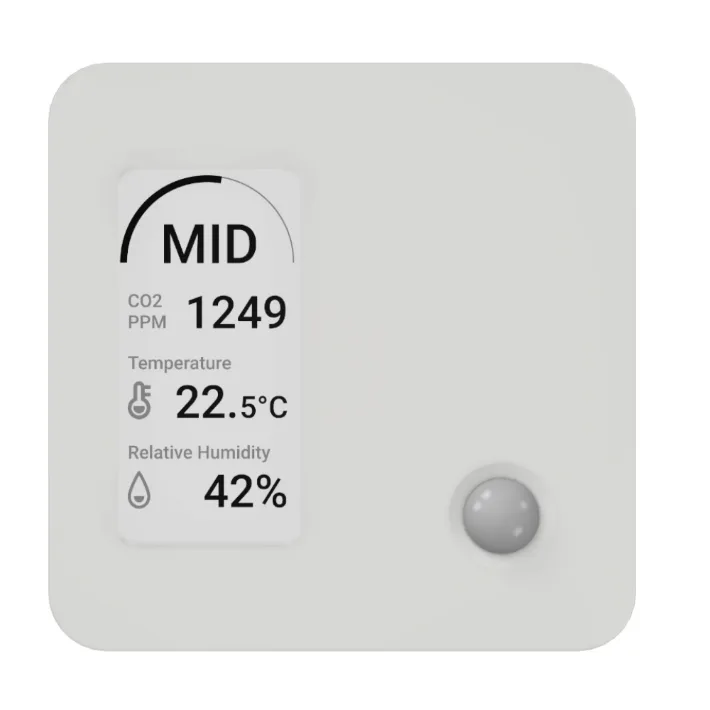
IoT sensors for indoor climate typically measure temperature and relative humidity at fixed intervals — every 5 or 10 minutes, for example. Over time this builds time series that show both natural variation and deviations from the expected.
The strength of this kind of moisture measurement in homes lies not in the sensor itself but in the data over time. That is where you can:
- distinguish between behaviour-related moisture and technical problems
- identify insufficient ventilation
- detect thermal bridges and cold zones
- see a lack of drying out after moisture loads
- document the effect of measures and adjustments
In practice that means damp problems can be found early — often before any intervention in structures or extensive repairs are needed.
Moisture data gives better decisions — not just more numbers
A common misconception is that more data automatically creates complexity. Used properly, moisture measurement does the opposite: it reduces uncertainty. When you can see how a home responds across days and years, more precise diagnoses become possible. Is the problem:
- resident behaviour?
- the ventilation?
- the construction of the building?
- or a combination?
That provides a much better basis for choosing the right measure — and for avoiding unnecessary or misdirected action.
One measuring point is often enough
Experience shows that humidity in the air of a home is often fairly similar across rooms when you look at data over several days. The differences come mainly from temperature and local ventilation — not from large variations in moisture content itself.
So one correctly placed reading in the home's living area can in many cases give a representative picture of the overall moisture load. Combined with outdoor weather data, the home's moisture excess can be calculated, allowing the effectiveness of the ventilation and the total moisture production to be assessed.
When several homes are measured at the same time — in a building or an estate, for example — it also becomes possible to compare and identify deviations across them.
From gut feeling to documented insight
Moving from gut feeling to data-driven insight is a decisive step in dealing with damp problems in homes. Continuous moisture measurement makes it possible to:
- find problems earlier
- target measures more precisely
- document development and effect
- reduce the risk of damage and complaint cases
Instead of reacting once the damage is done, work can be systematic and preventive — based on facts rather than assumptions.
FAQ — frequently asked questions about moisture measurement in homes
When is damp a problem in homes?
Damp becomes a problem when relative humidity or moisture in materials is raised over a longer period. It is the duration, not individual fluctuations, that matters.
Is one moisture reading enough?
A single reading gives only a snapshot. Understanding damp problems requires continuous measurement over time.
Can damp problems be detected without visible signs?
Yes. Many damp problems develop out of sight and can be spotted in the data long before visible damage appears.
What do IoT sensors typically measure?
Most sensors measure temperature and relative humidity, which together provide a solid basis for assessing moisture.
Shall we look at your buildings?
Book a no-obligation meeting — we will calculate your concrete potential.